Predictive Home Maintenance: AI That Knows Before You Do
Emergency repairs are expensive. A water heater that fails on Saturday night costs more than one replaced on your schedule. An AC that dies during a heat wave means paying rush rates while you sweat. The traditional approach — wait until something breaks, then scramble — is reactive and costly. AI predictive maintenance flips the script.
How predictive maintenance works
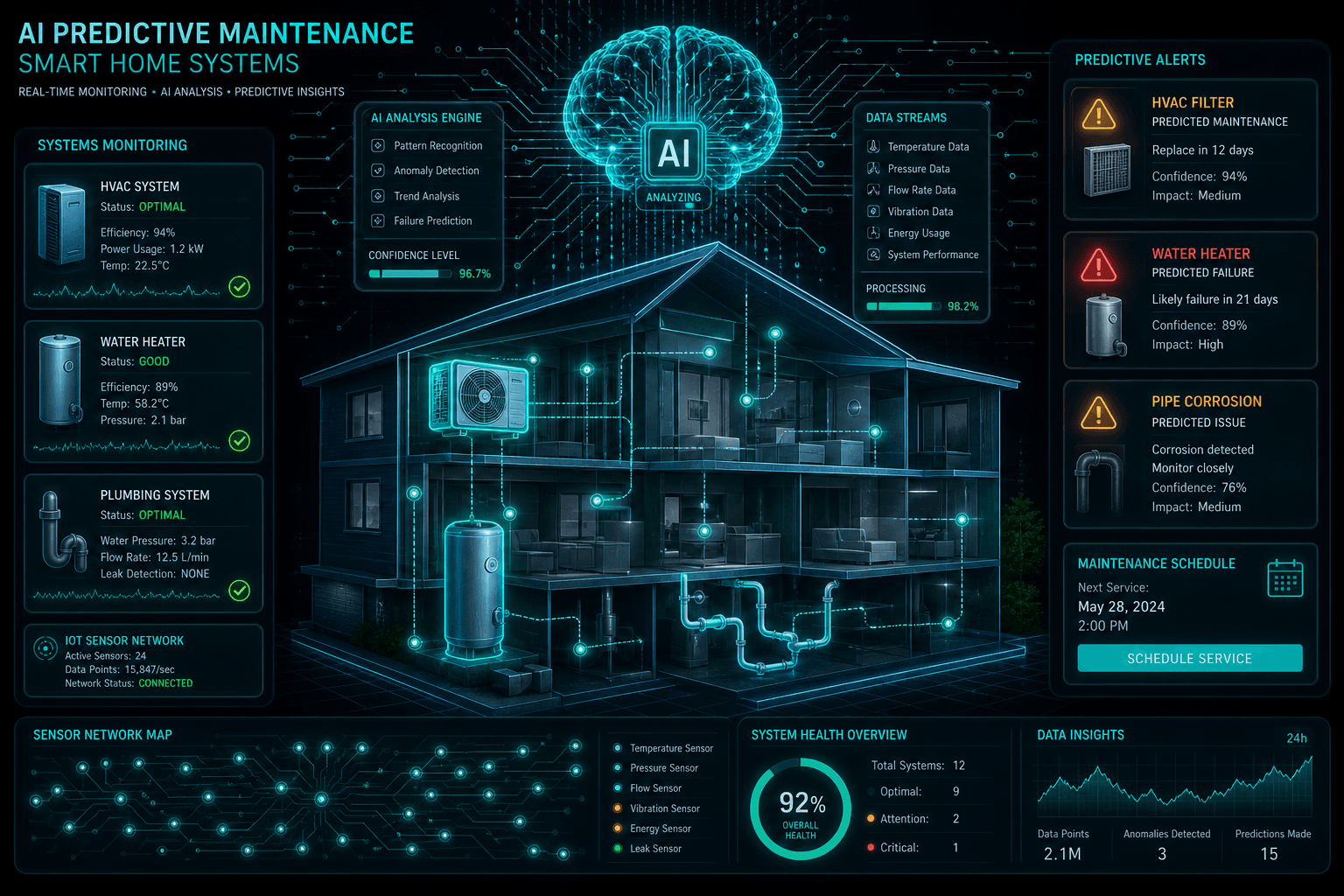
AI predictive systems monitor your home equipment continuously — through smart sensors, energy usage patterns, or performance data from connected devices. They compare your system's behavior to models of normal operation. When something deviates — an HVAC fan drawing more power, a water heater cycling more frequently, a sump pump running longer than usual — the AI flags it.
From alert to action
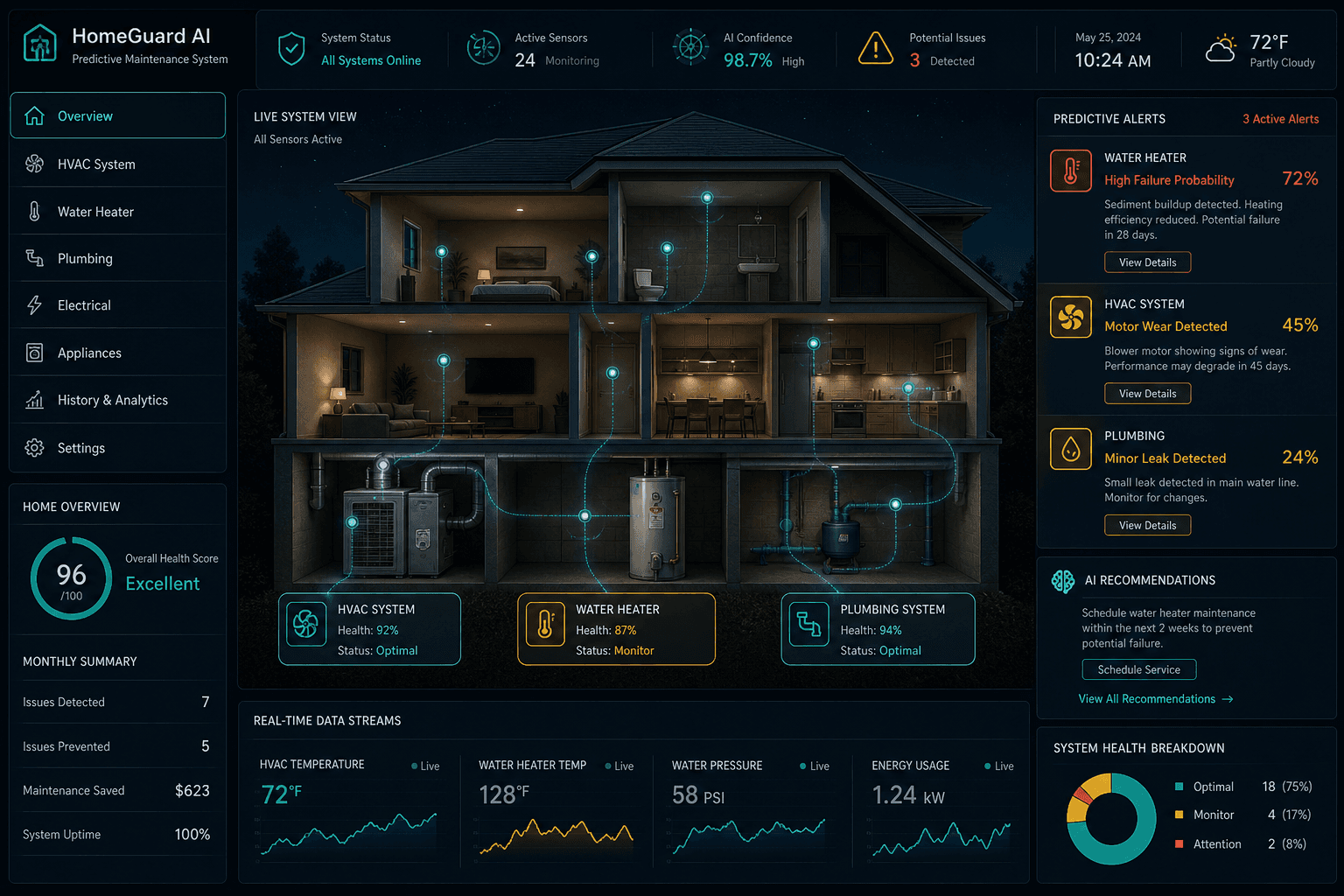
An alert means nothing if you don't act on it. AI-integrated platforms connect the detection to the solution. When the system predicts your furnace needs attention, it can offer to schedule a technician, estimate the repair cost, and even suggest whether maintenance or replacement makes more financial sense based on the equipment's age and condition.
- HVAC: Detect filter degradation, refrigerant loss, motor strain, or thermostat drift
- Water heaters: Identify sediment buildup, heating element wear, or anode rod depletion
- Plumbing: Spot slow leaks, pressure changes, or pump issues before flooding occurs
- Appliances: Catch early signs of compressor failure, motor wear, or electrical faults
The ROI of prediction
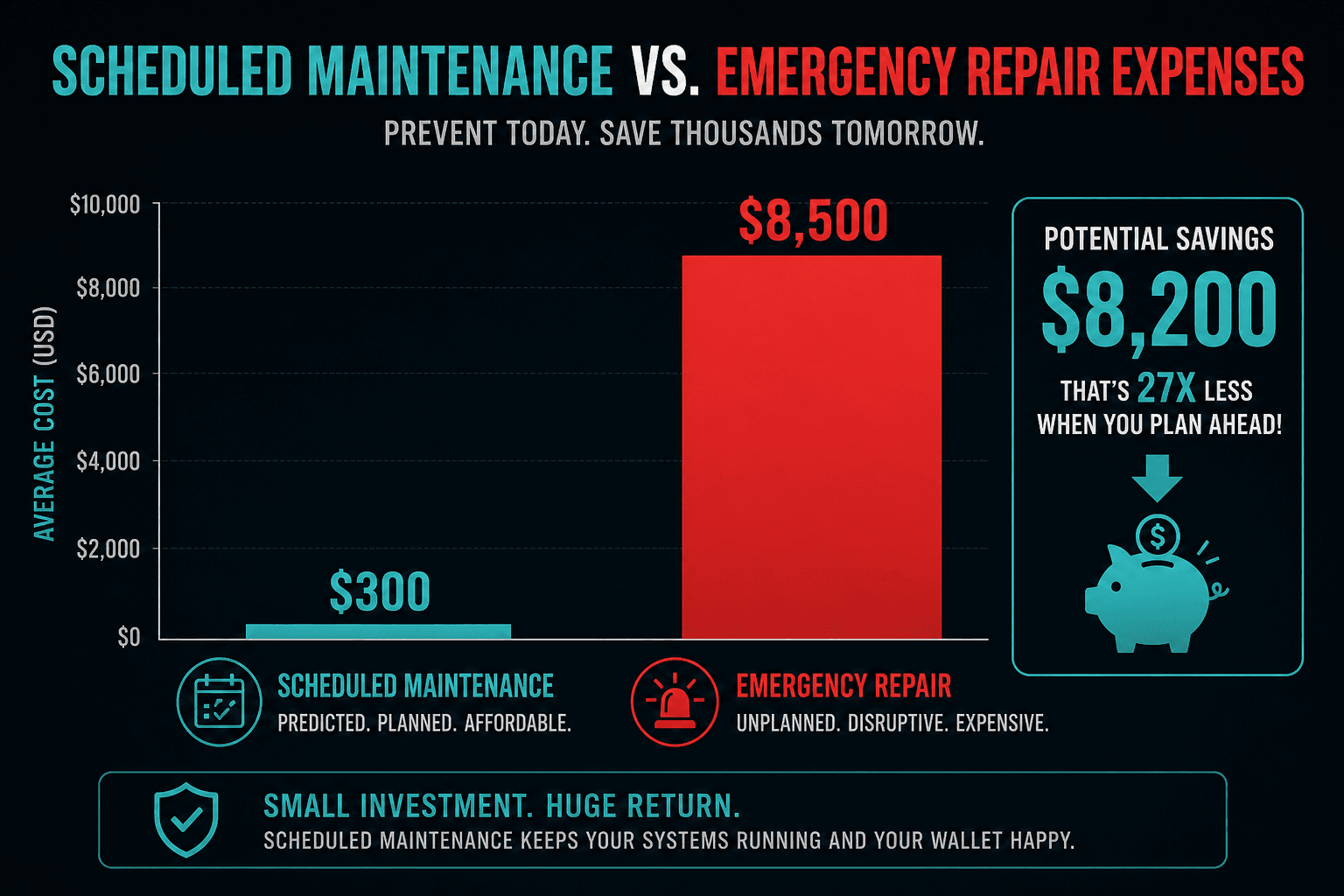
A proactive repair that costs $300 scheduled in advance might cost $800 as an emergency. A water heater replaced before it leaks doesn't cause $5,000 in water damage. Predictive maintenance isn't just convenient — it's economical. Over time, the savings from avoiding emergencies far exceed the cost of monitoring.
Your home is always talking. AI just helps you listen before the message is a breakdown.
Frequently asked questions
- Do I need special equipment for AI predictive maintenance?
- Smart sensors, connected devices, or a newer HVAC system with monitoring capabilities help, but basic AI predictions can use your service history and typical failure timelines for your equipment age and usage patterns.
- How far in advance can AI predict failures?
- Depending on the system and data available, AI can often predict issues days to weeks before failure. The more sensor data available, the more precise the predictions.